The Alienation of Lewis Kachinsky

By the time Lenia turns up, Lewis is considering a change of career, but at fifty it seems too late.  He’s a jaded therapist, all furred up from incongruence and neurosis absorbed from those who’ve passed through his consulting room.  A therapist who has an increasing urge to scream answers at clients, despite knowing the only realisations worth having are the ones they make themselves.  He grasps the Bakelite doorknob to the waiting room, transported to a younger and more eager hand. A hand that felt a tingle of excitement along with the uncertainty of each new encounter.  A hand that has been well and truly dealt. Consulting rooms in Manchester’s King Street, all architectural splendour and high-end shops had once inspired a sense of validation. Now, he barely notices Lutyens or Gucci.

Lenia arrives on an Indian summer’s evening of long shadows.  He steels himself. An old-fashioned word comes to mind. Ravishing.  Weariness again, at having to register all that moves through him. Instant physical attraction, a mild shame about it.  She looks at least twenty years younger than him. Dread about age, probable lack of attractiveness, although others say he’s in great shape.  Humiliation at vanity. A fear she’ll want to talk about sex. Silent curses for noting appearance as opposed to demeanour. Fear of sweat on the top lip, which he tries and fails to wipe discreetly.  Her almond eyes flick around the room. He judges the space and fears it reeks of hidden desperation. It’s a typical high-end therapist’s nest, solid period furniture, relevant books, an eclectic mix of painting and sculpture, two Chesterfields that face each other.  An antique walnut two-side desk. Dull and safe. A cliché, but this is just another projection; it’s what he imagines she thinks. He tries to remember where her referral came from, but can’t, even though he checked the notes minutes before she arrived.

Lenia looks like all the races of the world have been taken and blended to produce the most appealing outcome.  Light coffee skin, full mouth, arched cheekbones, long, black hair that shines when meeting the open sunset slats of the blind.  Oozing sensuality.

‘Promises to keep and miles to go before I sleep.’  Think of Julia, of twenty-five years, the life we’ve created, the family we’ve brought into being.

That would have been enough once, but no more.

Think of your position.  Inappropriate.

He introduces himself.  The pre-session patter is so familiar he manages to get through it without stumbling.  Administrative details, boundaries, expectations and so on. When asked if there are any questions, a subtle, smiling shake of the head is offered.  Lenia leaks no doubt or uncertainty. An inscrutable, magnetic waxwork.

The stock question is asked, the question that took him years to decide upon, after a hundred pretentious permutations.  The simplest things are often the best.

“So, Lenia, can I ask what’s brought you here today?”

She expresses a need to come out of the closet.  An assumption she means gay sinks his heart which leads to another self-reproach, but it proves wrong, anyway.

‘The closet’ turns out to be something else altogether.

“I think I’m an alien.”  She says. Her voice is like silk.

He’s impressed, most clients who travel the alien line take at least five sessions to say it out loud.  There are times he has the urge to reply, “Don’t we all?”

“You feel like you’re an alien?”  Is the stock response; a little Rogerian repetition to get the ball rolling.

“No,” she says, “I don’t feel like an alien, I am one.  I really think so.”

She has no problem with eye contact, the opposite, in fact.  Her expression displays no hint of mental illness, a countenance recognised with experience.  Sanely sincere, confident even. It intrigues. For the first time in ages, a little buzz of curiosity, a metaphorical sitting up and taking notice.

~

Julia is preparing cassoulet, which creates an air of garlic-laden culinary humidity.  Lewis puts his arms around her waist from behind and kisses her on the cheek. He squeezes her backside.

“What is this thing you’ve got about accosting me when my hands are full?”

“Who could resist?”  He says and then remembers.  He extricates himself.

Lewis is ninety percent certain Julia is having an affair with the smooth and smug Calum Gilquist, a psychologist of his acquaintance.   He swings between a primeval ego that would happily kill them both and the knowledge her cheeks are rosier for it. The proverbial spring is back in her step.  He says nothing but wishes to return to the moment of forgetting when everything seemed normal, even though there’s no such thing. A normal man, living in his normal, rambling, Victorian South Manchester terrace on a normal tree-lined street, doing his normal job, attending to his normal life.  Lewis considers the proposition that he’s abnormally normal.

She turns from the hob, wiping her hands on a paisley tea towel that matches her apron.  A long-ago gift from their daughter, Jasmine, meant for Lewis. Both items are tatty and faded, but Julia can’t bear to part with them.  She’s been cooking a lot of labour-intensive meals lately.

“You’re glowing.”  She says, the palm of her hand on his cheek.  “You haven’t had that look for a while. Good day?”

“Good enough.  What time are we eating?”

“Be about an hour.”

“I’ll just finish my notes, then.”

The study is pretty much a replica of the consulting room. He pulls his laptop out, dawdling on the keys, cursing Julia for opening the forbidden door.  It crosses his mind that it’s he, not Julia who’s created the situation, however unconsciously. That’s the trouble with being a therapist; always second guessing the roots and causes. There are times he feels relieved at being cut loose, the luxury of guilt-free desire for another as his hand drifts thighward when taking a shower.  Once dressed, he and Julia sit at the table, eating and talking just like they’ve always done.

~

 It isn’t long before life centres around Lenia’s twice weekly sessions.  Days counted until the next encounter, thoughts organised around them. Groomed, prepared and refreshed, Lewis is a bower bird creating a stage on which he can never dance.

The weather has turned cold, but she still appears in light summer dresses, only never the same one twice. He especially likes the white one splattered with oversized red roses.  An erotic Rorschach of wedding nights and Valentines days. Always cleavage, not too much, shiny legs taut in heels. She doesn’t seem to feel the cold at all. The room’s rosy when she’s in it, softer, and fragrant.  Appeal courses through veins, but it’s not all; he feels, simpatico. Lenia is water on rock. Every second in her presence erodes the barnacled therapist without.

“Can I ask you something, Lewis?”  Lenia says.

“Of course.”

“What’s the difference between you and a prostitute?  Such pretty words for you, counsellor, therapist, saviour, even.  Such ugly words for them, hooker, slag, dog, slut. Regard for you and derision for them.”

This is typical Lenia, she likes to challenge his world view and often succeeds

“Mucous?”

She laughs.  “I’ll give you that. More physical contact.  But you trade in emotion – isn’t that more intimate?  The only difference I can see is the value you place on these things, the circumstances and environment in which you work.  Prostitutes provide a vital social service, just like you.”

Lenia always pays in cash and places the notes on the table.  He’s thought more than once it’s like she’s leaving it on the bedside cabinet.

“You see me as a kind of prostitute?”

“That’s not what I’m saying as such. Your question reveals my point.  The Oxford English Dictionary defines prostitution as the unworthy or corrupt use of one’s talents for personal gain.  I’ve seen plenty of things in your world that look a damned sight more unworthy and corrupt than a straightforward transaction.”

“I understand what you’re saying.  I’d be interested to know what’s prompted you to say it.”

“Because there’s so much about your planet that seems just plain dumb to me.  I’m hoping you can help me understand it better.”

Lewis has observed that Lenia’s claim to be alien appears to require no resolution. No weeping and wailing, suicidal thoughts, anger.  Lenia only wishes to discuss her experience of being amongst humans. No matter how skilled his questions, how empathic his responses, there are no cracks in the pavement Lenia walks on.  Apart from the scale of her single delusion, she appears to be emotionally healthy in every other sense.

“So, what you’re saying is, it’s only the value judgements we place on sex workers that would lead to a therapist being offended by the comparison.”

“What if you called them love counsellors, instead?  Or erotic therapists? What if they enjoyed the respect and gratitude of society for the vital work they do?  What if they had a stately love nest on King Street?”

‘The unworthy or corrupt use of one’s talents’ is stinging Lewis.  That’s what he’s been doing for the past couple of years- paying lip service to people who deserve better and taking their hard-earned cash in the process.

On the Metro home, he considers the premise.  Remove sex from the equation and most people indulge in prostitution of one kind or another.  He occasionally thinks that about Julia, who’s emotionally impregnable. For Julia, Lewis has been little more than a provider and source of status, but by the time he realised it, they were in possession of offspring.  Hell, maybe that’s what he wanted – a wife who wouldn’t interfere with his ambition and allow him to be the star in the family firmament. Since the children left home, he’s come to believe that Julia sees him as a rocket booster that having served its purpose, can be conveniently jettisoned.

He looks around the carriage.

What a bunch of whores we all are.

Lewis blinks as halos of coloured light surround the passengers’ heads.  Squeezing his eyes shut, fears about dementia, strokes, blood pressure or hallucinations set his heart thumping.  When he opens them again, everything is back to normal.

~

Martha has been Lewis’s clinical supervisor for the past sixteen years.  All her clients have retired, bar Lewis, who’s she’s agreed to carry on seeing as long as her brain continues to function in an adequate manner.  Lewis has always been grateful for her warm and earthy presence, her counsel and gentle challenges. His initial sessions with Martha taught him how easy it is to see what’s going on with other people and how difficult it is to see what’s going on with yourself.  He was grateful for the experience, it gave him patience when clients were stuck and going around in circles for weeks, or even months on end, which could be tedious in the extreme. Now, that patience has worn thin, like over-washed cashmere. He’s just about to knock on Martha’s door when his phone rings.

“Hi, Jack?

Are you okay?  

Perhaps we discuss that in our session later?

You’re what?

You’re standing on the railway line at Castleton.

Jack, I need you to calm down.

No, I’m not in any position to call the shots, right now.

I see – and how do you feel about that?

Aha, I understand.  Jack, could I ask you to step off the line, so we can discuss this properly?

Yes, I appreciate it’s not usually the role of the therapist to be so directive, but I think that under the circumstances…

I can’t tell you that, Jack.

It feels unpleasant, Jack.  I’m concerned about you.

Of course, I care about you, I care about all my clients.

Well, we discussed boundaries in our first session, Jack.”

Lewis’s auditory attention shifts.  The background noise becomes as clear as Jack’s voice.

“You know what, Jack? Working with attention-seeking compulsive liars is like trying to unravel cold spaghetti.  I don’t think you’re on the railway line at Castleton at all. I think you’re at home watching daytime TV. I’ll see you at your next session.  I’m calling you out.”

Lewis experiences a rush of energy the like of which he’s never known before.  Then a rush of fear about the number of cardinal rules he’s just broken. Then further fear about the sudden bout of super-hearing coming so soon after the coloured lights.  A text comes through. It’s a photo of Jack in his house watching the TV. The caption reads ‘You got me.’ Lewis grins and switches off his phone. Martha opens the door.

“I heard you talking.”  She says.

They sit in the conservatory of a house not unlike the one Lewis lives in.  Over the years, Martha has turned plump and grey, but has always been the sharp guardian of Lewis’s psyche.  Now, even Martha is receding into the distance, the relic of a former self sailing into the sunset. A mentor past her sell by date.  Lewis is no longer bowled over by anything she says. He even knows her tells like the back of his hand. If something gets Martha where she lives, she’ll link her hands together.  If she’s secretly amused, her head will dip to one side. If she thinks you’re hiding something, her legs will cross at the ankles as they have done for most of the session. That’s probably because he hasn’t told her about Lenia.  She knows something’s up, just not what, probably knows his tells like he knows hers. Unconscious body language often reveals a different narrative to the one being related.

“Have you ever come across a client who doesn’t display any non-verbal clues, Martha?”

“I don’t think so.  That’s probably impossible, everyone has them.  Why do you ask?”

Because it’s just occurred to me that Lenia shows no tells at all.

~

“Secondary schools, what’s that all about, Lewis?  Seven hundred walking hormones who are probably at the most primeval they’ll ever be, all together in one place with only a handful of hopefully appropriate adults to keep an eye on them.  How crazy is that? Really?”

The energy in the room is intense and all he longs for.  It fills his days and nights.

‘Promises to keep and miles to go before I sleep’ is ditched in favour of Robert Frost’s previous line, ‘The woods are lovely, dark and deep.’  Lenia is the sensual armchair into which Lewis sinks twice weekly. The reason for her attendance has slipped beyond his reach. She fails to give any hint of where she comes from, her occupation, her associations.  It creates an impression she appears out of nowhere and then returns to it. Like she exists only for him. Today’s discourse is sweeping and starts to encompass the whole human race, like she’s shifting up a gear.

“These people are hopeful in some ways, Lewis, they have potential, but their primordial drives frustrate me.”

Her eyes dart in his direction. “What are you thinking?”

Lewis hesitates, self-disclosure is a tricky thing in the world of therapy and should be used sparingly.  Nevertheless, it’s better than lying.

“I’m thinking about many years ago, watching my little boy in the nursery playground, all that creative innocence was so delightful to me, but I could see traits developing in some of his peers.  I remember thinking that Julian, an overconfident tank of a four-year old, was probably going to be a right little bastard.”

“Then you understand where I’m coming from.”

Lewis is rewarded with a flirtatious flick of the head.  He’s tempted to ask about Lenia’s planet, but even in this state of enchantment, a glimmer from his former self says it’s going too far.  

Things have been happening to Lewis, things that would have once frightened and disturbed as potential illness or mental imbalance but are now noted as curiosities.  The coloured lights around people have appeared twice more. His hearing is selectively acute, like he’s got a secret microphone he can train on anyone who catches his interest.  He’s discovered a profound dislike for the smell of nutmeg and oregano. Synthetic fabrics are nothing short of torture and find their way to the charity shop bag. He needs considerably less sleep.  

If Julia senses disturbance, it goes without comment.  She’s long understood that his vocation can unsettle. Her admiration for his work is part of the glue that holds them together.  At least it was. It’s probably not that at all, just too busy thinking about writhing with Calum Gilquist.

~

Lewis can no longer resist; caution is cast aside; vestiges of restraint and responsibility sweated out in a sudden fever.  Concerns for transference and rationality are a memory. He no longer deflects, steers attention back to the client, he engages and answers, revelling in the liberation of words without restriction, spewing a lifetime’s frustration.  Lenia’s delight is clear and feeds his enthusiasm. They race towards an unspecified goal like two dogs who’ve caught scent of a rabbit. The desire to please her, dive further into the pool of her psyche consumes. He embraces a self, cocooned within.  Life seen through a tunnel, detached, always in the distance. His dreams are filled with unearthly landscapes through which he runs in slow motion with Lenia. The ground beneath his feet always soft, the light, soothing, the air filled with new sounds.

Lewis is no longer aware he’s late for work, the bin has gone unemptied, dinners with friends have been forgotten or filled with emotional absence.  Client notes are a thing of the past, as clients themselves are fast becoming. Julia realises an overdue concern that begins with sympathetic questions and ends with one of those lists of misdemeanours that women are so skilled at.  She gets sarcasm in return.

Alerted by Julia, Martha visits.  He invents a mish-mash of fears about ageing and existential angst, rendered from clients past.  He even throws in Calum Gilquist for maximum impact, knowing Martha may well concoct a theory that Julia’s concern is borne of unconscious guilt.  He’s pretty sure she buys it.

~

Lewis Kachinsky studies himself in the hall mirror before leaving the house.  Younger, fitter, mind sharper, less grey in his close-cropped hair, which he smooths, dropping his keys in the process.  After bending down to pick them up, he notices ‘The Psychology of Cult Behaviour – Techniques for Deprogramming.’ By Calum Gilquist, lingering on the bookshelf.  He’d forgotten it was Gilquist’s speciality. He pulls the book out and opens it. Running down the table of contents, there’s a gripping in his chest, a flicker in the mirror.  The flicker is in his own eyes, spreading until the whites become blue as a swimming pool. A double take. The optical illusion is expected to recede but doesn’t. He staggers back, pinned to the wall, reeling.  Faint and clammy, he decides to make coffee and sit for a few minutes. After the coffee, he looks in the mirror – gone.

Excitement and terror paralyse, but the mind clears.  All doubt is removed, the path, unimpeded. The day’s clients are cancelled, except for Lenia.  He takes the Metro wearing sunglasses, in case of relapse, which draws attention, but not the fearful kind.  Fields of coloured light no longer ebb and flow, but constantly waver around people’s heads, shifting as thought, feeling and action change.  The colours are predictable, even for a human. Red denotes irritation and anger, surging in a pregnant woman as two teenage boys rush past her to claim the two remaining seats. Blue is calm, yellow is happy, green is love and contentment.  These are just the basics; the colours move and intertwine into more subtle permutations, but are still understood, it’s a language he needs no introduction to. He zooms in on any sound that catches his interest; whispered arguments, teasing, gossip, business calls.  He can turn his attention to anyone in the carriage and know exactly where they’re at. His profession was the ultimate arena for the perfection of his craft.

The irony of Gilquist being the one who planted the final piece of the puzzle raises a smile.  Lewis thought he was Lenia’s therapist, but of course, she was his. Her accomplishments in the classic art of deprogramming were admirable.  Textbook.

Her appearance designed to please and engage, setting the scene for stage one:

Discredit the figure of authority.

In this case, his sacred, therapeutic vows, beautifully corroded by Lenia’s heady presence.

Stage two, present contradictions.

“What’s the difference between you and a prostitute?  Such pretty words for you, counsellor, therapist, helper, saviour, even.  Such ugly words for them, hooker, slag, dog, slut. Regard for you and derision for them.”

Stage three, reality over ideology.

He had always known, somewhere in the deepest core of himself.  Known without knowing. Waiting for the release of the untrammelled self, revelling in the liberation of being with Lenia.

Stage four, shifting loyalties.

Julia, Martha, friends and colleagues all ditched in favour of his heart’s desire.

Stage five, identification with the deprogrammer, as opposed to the oppressor.

The timing was perfect, wandering wife, children left the nest, jaded with the job.  Little to bind him. It had all been planned so. He understands that it had to be this way.  She couldn’t just turn up and say “Well, Lewis, guess what? You’re an alien who’s been planted among humans to study them, but now it’s time to come back to the fold.”

To truly understand what it is to be human, he had to engage in the messy business of being one. Lewis has heard pretty much everything from his clients; incest, abuse, infidelity, criminality, fear, delusion.  There is no aspect of the human landscape that Lewis hasn’t travelled. The mechanisms by which he was made to forget and inhabit this strange arrangement are still mysterious, but he doesn’t doubt that all will be revealed.  In the meantime, life pulses again, the sense of mission he encounters, full of joy and meaning.

Lewis feels a sneaking admiration for the talking monkeys who travel unknowingly beside him.  It’s surprising what a bunch of greedy, aggressive primal creatures can achieve. Humans will be a pushover; he knows all their strengths and weaknesses, just as Lenia knew his.

Slivers of memory are returning, they weren’t dreams after all; blue, walking on a soft, cloud-like surface, two suns in the distance, talking without words.  Dome-shaped structures. He can barely wait for his meeting with Lenia, hurrying as the tram approaches his stop.

He thinks of Lenia in her human guise, to which he’s become more than accustomed. Thinks of curves bouncing in that white dress with red roses all over it.  Maybe they could stay in this form just a little bit longer. Be a shame to waste it.
Looking for Jordan B. Peterson: A snake-oil free take on “12 Rules for Life”


‘Read not to contradict or confute; nor to believe and take for granted; but to weigh and consider.

Francis Bacon.


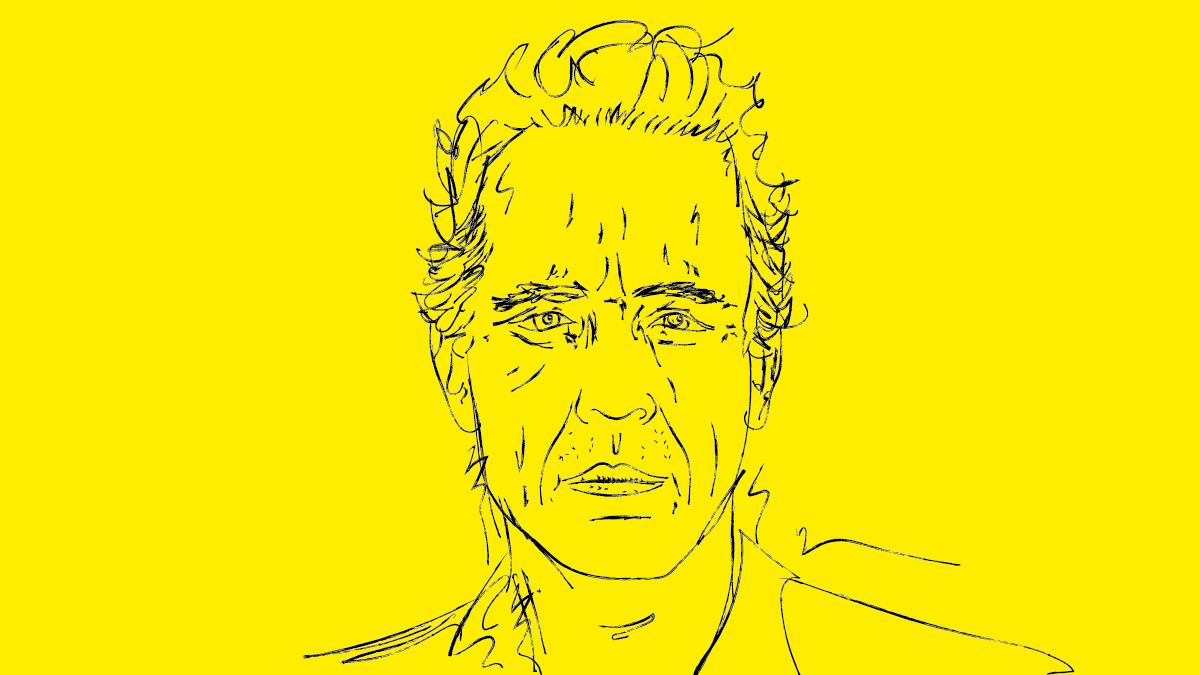
Misogynistic, a gift to the alt-right, complicit in the oppression of women and enemy of political correctness, all this and more has been said of Jordan B. Peterson. Indeed, the list of misdemeanours grows daily.  Some of the stuff I’ve looked at regarding 12 Rules for Life make me wonder if the people involved read the same book I did, or whether they read the book at all.

This brings us to a central problem.  Many who comment are merely concerned with grinding the axe, whether it be for glory, mischief or ideological validation.  Peterson’s infamous interview with Cathy Newman is testament enough to that.  The sound bite of bullshit might produce a frisson of intrigue, but it doesn’t really get us anywhere.  Neither does the guru/hero worship of unquestioning followers.

I’m an author, a social scientist, a qualified counsellor and a lifetime student of psychology, especially the Jungian kind.  I’m also experienced in working with people who might be described as disadvantaged.  I believe my take on 12 Rules for Life is an informed one.

Peterson exudes honesty, not only in 12 Rules, but also in his introduction to Maps of Meaning – a weighty tome, not for the fainthearted, but well worth a read.  When I sense honesty, it lifts my spirits and engenders confidence in the person’s sincerity. Furthermore, Peterson admits he may have got some things wrong.  Manna from heaven.  Everyone gets some things wrong, even if only a little.  We’re imperfect beings, it’s the human condition.  And yet, how few writers of serious work are willing to admit this to themselves, let alone their readers.  His voice has gravitas, laced with an underlying humility and he’s not averse to employing wit.  As a writer, he’s just plain likeable.  As a scholar, he’s done his homework.  As a practising therapist, he’s earned his spurs.

When reading 12 Rules, there were times I felt I was being gently told off by a father figure, albeit a wise, loving and kind one.  Having never had one of those in my life and after initially feeling rattled by it, I found myself rather taking to it.  It’s claimed that the book is aimed at men, which I would dispute.  I believe men find it appealing, which is not the same thing.  If this approach resonates with them, all well and good, I believe they’re sorely in need of it. Like Peterson, I’ve observed that many men are in crisis and don’t believe they deserve any less compassion than women.  The crosses we bear may be different, but they are crosses, nevertheless.  Blaming today’s men for ‘patriarchy’ is like blaming the current generation of Germans for the Second World War.  As a young adult I believed that we were all blank pages and could create any society we wanted.  This belief was chronically naïve.  I learned that just because you want something to be true doesn’t mean it is.  Cultural norms form, there’s no evil master plan and yes, culture (and biology) evolves, though more slowly than we would often like.  Indeed, if change comes too quickly, people fall prey to the chaos that Peterson so eloquently describes.

The framework Peterson has created to explain our relationship with structure and chaos is superb, a tool to help us understand forces in the individual and wider society that can seem inexplicable.  But for me, the real genius of 12 Rules has been overlooked in the scramble for the smart remark – its archetypal nature.  When the archetypes of life and story are studied in any depth, one becomes imbued with them.  Peterson’s archetypal structure for the book may well have begun unconsciously – as an archetypal writer myself*, I understand this way of being doesn’t necessarily stem from conscious thought – it can rise from the depths of its own accord.  Whatever the case, it’s a master stroke.  The very title, ‘12 Rules for Life’ immediately brings forth the numinous energy we relate to the story of the Ten Commandments, which is referenced in the introduction. The structure of each chapter is designed to appeal on the conscious and unconscious level, energising the psyche to hear the call to action, whilst still referring to reason and research.  This is underpinned by meaningful reference to works of literature, philosophy and psychology.  His own personal reflections, sometimes light-hearted, sometimes heart-rending, draw us further into deep emotional connection, whilst the Coda sings of the fine and ancient tradition we generally term ‘fairy tale’.  12 Rules can re-root the floundering in fertile archetypal soil.  I believe this to be the primary reason it resonates with so many – and deservedly so.

I don’t agree with everything in 12 Rules.  There is, in my opinion, a predictably human smattering of selective statistics and biological ‘truths’, but not enough to induce a loss of faith in the broad strokes.  Some differences in perspective, also, but Peterson’s as entitled to his considered opinions as I am.  I can understand where the germs of mischief lie for those who’ve blown things way out of proportion.  Some supporting assertions are arguably misguided, but I can see nothing that justifies outrage.

Peterson believes that if we aim for the rules he’s laid out, our lives and our society would be better for it.

The question is, do I believe that?  Absolutely.

Peterson’s meteoric rise could easily result in what Jung would describe as inflation, but I believe he has the capacity to withstand it. I hope instead, he continues to question, rework and refine.  I watch with interest.


*For an introduction to Jungian themes, see my short story, Carl Gustav Jung: The Merchant of Soul. www.bbkindred.co.uk

For modern fiction that draws on archetypal themes including the hero myth and descent into the underworld, see The Cairo Pulse by B.B Kindred, available from all major Ebook retailers.


The Therapeutic Encounter

Miles to Go and Promises to Keep.

Lewis Kachinsky waits, jaded therapist, furred up with client incongruence and neurosis.  Weighted by transference – his own and that of others.  Tired of the tedious march to even the stingiest breakthrough.  An increasing urge to scream answers, even knowing the only worthwhile realisations are the ones clients make themselves.  By the time Lenia turns up, he’s considering a change of career, still caring enough to worry about being counterproductive, but at sixty, it seems too late.  He grasps the Bakelite doorknob leading to the waiting room, transported to a younger hand, eager to see, learn, serve.  A hand that feels a tingle of excitement along with the uncertainty of each new encounter.  That hand has been well and truly dealt.

Lenia arrives on an Indian summer’s evening, amber light and long shadows, expressing a need to come out of the closet.  An assumption she means gay proves wrong.  He steels himself.  An old-fashioned word comes to mind.  Ravishing.  Weariness again, having to register all that moves through him.  Instant physical attraction, a mild shame about it.  She looks at least thirty years younger than him.  Dread about age, probable lack of attractiveness, although others say he’s in great shape.  Humiliation at vanity.  A fervent hope she doesn’t want to talk about sex.  Silent curses for noting appearance as opposed to demeanour.  Her almond eyes flick around the room.  He judges the space.  A typical high-end therapist’s nest, solid period furniture, relevant books, an eclectic mix of painting and sculpture, two Chesterfields that face each other.  Dull and safe.  A cliché, but this is just another projection; it’s what he imagines she thinks.

Lenia looks like all the races of the world have been taken and blended to produce the most appealing outcome.  Light coffee skin, full mouth, arched cheekbones, long, black hair that shines when meeting the open slats in the blind.  Oozing sensuality.

‘Promises to keep and miles to go before I sleep.’  Think of Julia, of thirty years, the life we’ve created, the family we’ve brought into being.

This is no use.  Julia is fucking Jordan Gilquist, a psychiatrist of his acquaintance.  Lewis Kachinsky swings between a primeval ego that would happily kill them both and the compassionate knowledge that her cheeks are rosier for it.  The proverbial spring is back in her step.  He says nothing.

  Think of your position.  Get your brains out of your dick.  Inappropriate.  Bloody old fool.

‘The Closet’ turns out to be something else altogether.

“I think I’m an alien.”  She says.  Smooth, calm, hypnotic.

He’s impressed, most clients who travel the alien line take at least five sessions to say it out loud.  There are times he has the urge to reply, “Don’t we all?”

“You feel like you’re an alien?”  Is the stock response; a little Rogerian repetition to get the ball rolling.

“No,” she says, “I don’t feel like an alien, I am one.  I really think so.”

She has no problem with eye contact, the opposite, in fact.  Her expression leaks no hint of serious mental illness, a countenance he’s learned to spot over the years.  Sanely sincere, confident even.  It intrigues.  For the first time in years, a little buzz of curiosity, a metaphorical sitting up and taking notice.


~


It isn’t long before life centres around Lenia’s twice weekly sessions.  Days counted until the next encounter, thoughts organised around them.  ‘I’ll do such and such before my session with Lenia.’  ‘I’ll meet Josh Thursday night, not Wednesday, don’t want to be hungover for my session with Lenia.’  ‘I’ll book Lenia in last, then we can run on a little if need be.’  He tries not to think about her, but evenings find him ruminating over things she’s said:

“Can I ask you something, Lewis?”

“Yes?”

“What’s the difference between you and a prostitute?  Such pretty words for you, counsellor, therapist.  Such ugly words for them, hooker, slag.  Regard for you and derision for them.  Mucous – I’ll give you that. More physical contact.  But you trade in emotion – isn’t that more intimate?  The only difference I can see is the value you place on these things, the circumstances and environment in which you work.  Prostitutes provide a vital social service, just like you.”

This is typical, she likes to challenge his world view and often succeeds.

“Secondary schools, what’s that all about?  Seven hundred walking hormones who are probably at the most primeval they’ll ever be, all together in one place with only a handful of hopefully appropriate adults to keep an eye on them.  How crazy is that, Lewis?  Really?”

If Julia senses disturbance, it goes without comment.  She’s long understood that his vocation can unsettle.  Her admiration for his work is part of the glue that holds them together.  At least it was.  It’s probably not that at all, just too busy thinking about sucking Jordan Gilquist’s cock.  He doesn’t mention Lenia to his client supervisor, Martha.   Normal service shows no sign of being resumed.  ‘Promises to keep and miles to go before I sleep’ is ditched in favour of Robert Frost’s previous line, ‘The woods are lovely, dark and deep.’  Lenia is the sensual armchair into which he sinks twice weekly.  The reason for her attendance has slipped beyond his reach.  The claim to be alien is not a problem, she seeks no resolution. No weeping and wailing, suicidal thoughts, anger.  In between the challenges, Lenia only wishes to recount her experience of being amongst humans.  She fails to give any hint of where she comes from, her occupation, her associations.  It creates an impression she appears out of nowhere and then returns to it.  Single minded, but for what purpose?  The observations are piercing, entertaining.  It’s like she’s speaking his thoughts.  At times the discourse is sweeping and encompasses the whole human race, seen as akin to small children, hopeful, having potential, but frequently frustrating in their primordial drives.  She understands humans, but sees them from a place that’s altogether other.  Lewis gets this.  He remembers watching his eldest, James, in the nursery playground, delighting in creative innocence, but feeling disturbed about the behavioural traits already manifesting in some of James’s peers.  He remembers thinking that Damian, an overconfident tank of a four-year old, was probably going to be a right little bastard.

Lewis is tempted to ask about her own planet, but even in this state of rapture, it’s going too far.  A glimmer from his former self.  Listening, even indulging, is close to the edge, but entering the delusion is over it.  The weather has turned cold, but she still appears in light summer dresses, but never the same one twice. He especially likes the white one splattered with oversized red roses.  An erotic Rorschach of wedding nights and Valentines days.  Always cleavage, not too much, shiny legs taut in heels.  She doesn’t seem to feel the cold at all.  The room feels warm when she’s in it, the lights, softer, the air, fragrant.  Appeal courses through veins, but it’s not all; he feels, simpatico.  Lenia is water on rock.  Every second in her presence erodes the barnacled therapist without.


~


Caution is cast aside; vestiges of restraint and responsibility sweated out in a sudden fever.  Concerns for transference and rationality are a memory.  The sessions are mutually wholehearted.  Lenia continues to question his world view.  He doesn’t deflect, steer attention back to the client, he engages and answers, revelling in the liberation of words without restriction, spewing a lifetime’s frustration over the antics of the human race.  Lenia’s delight is clear and feeds his enthusiasm.  The desire to please her, dive further into the pool of her psyche consumes.  He embraces the alien self that has always been cocooned within.  Human life seen through a tunnel, detached, always in the distance.  The only time he truly feels alive is when he’s with Lenia.  He gets to work late, the bin goes unemptied, dinners with friends are either forgotten or filled with emotional absence.  Julia’s overdue concern goes unnoticed, which culminates in a visit from Martha, his supervisor.  He invents a mish-mash of fears about ageing and existential angst, rendered from clients past.  He even throws in Jordan Gilquist for maximum impact, knowing Martha may well concoct a theory that Julia’s concern is borne of unconscious guilt.  He’s pretty sure she buys it.


~


Lewis Kachinsky studies himself in the mirror.  Younger, fitter, mind sharper, less grey in his close-cropped hair.  A flicker in his eyes, spreading until the whites become blue as a swimming pool.  A double take. The optical illusion is expected to recede, but doesn’t.  He makes coffee, looks in the mirror –  still there.  He takes a shower, looks in the mirror – still there, keen and beaming.  Familiar. Excitement and terror paralyse, but the mind clears.  All doubt is removed, the path, unimpeded.  The day’s clients are cancelled, except for Lenia.  He takes the Metro wearing sunglasses, which draws attention, but not the fearful kind.  Fields of coloured light waver around people’s heads, dancing and shifting as thought, feeling and actions change.  If he’d known of this capacity when he was still in full therapist swing, how much easier would his job have been?  Moments see him smiling, sniggering.  He thought he was Lenia’s therapist, but of course, she was his.  How accomplished she was in the classic art of deprogramming.  Textbook.  Her appearance designed to please and engage, setting the scene for stage one.  Discredit the figure of authority, in this case, his sacred, therapeutic vows.  Stage two, present contradictions – the repeated, skilful challenges to his world view.  Stage three, reality over ideology, release of the untrammelled self.  Stage four, shifting loyalties.  Stage five, identification with the deprogrammer, as opposed to the oppressor.  The timing was perfect, wandering wife, children left the nest, jaded with the job.  Little to bind him.

He knows what she will say, “Well, Lewis, if I’d have turned up and said, guess what?  You’re an alien who’s been planted among humans to study them, but now it’s time to come back to the fold.  How do you think that would have gone?”

He’d been made to forget, agreed to forget, or it could never have worked.  But now he remembers who he really is.  Life pulses again, the sense of mission he encounters, full of joy and meaning.  He thinks of Lenia in her human form, to which he’s become more than accustomed. Thinks of curves bouncing in that white dress with red roses all over it.  Maybe they could stay in this form just a little bit longer.  Be a shame to waste it.


The Breath of Snow

I was told there is a land far away where it gets so cold, water falling from the sky freezes on its way to the earth and becomes something they call snow.  This snow is made of tiny patterns, each one different from another; it covers the land and turns it white, so even on the darkest night, the way is clear before you.  They say it is beautiful.  They say there is no silence like the silence of snow.

When snow comes to this faraway land, the people cut down great, thick pine trees and bring them to their dwelling places, to remind them of the time before and after snow when the earth is filled with bounty for their sustenance.  They take things that are bright and shiny and filled with colour and put them on the trees and prepare a great feast stored from the time of plenty, to be shared with their tribe.  It is their custom to give offerings to each other and forget all the things of trouble and remember all the things of good.

I dreamt of this place where the snow falls.  I dreamt I stood in the snow and as I stepped forward, the perfect silence was broken by a marvellous sound each time I put one foot before the other.  When I sent the breath out from my body, it turned into a white mist; I thought it must be the breath of snow.  My heart filled with wonder at such sights and sounds; were it not for the cold that chilled my bones, I might have believed I was in the world of the ancestors.  I dreamt I stood before a dwelling place and by a strange magic, I could see inside it.  I saw the great tree and all its glory.  I stared and could not stop, hardly able to believe such things existed in the world of everything mortal.

I saw children, plump and rosy and thought the roots they eat must be everywhere and the animals the people hunt must be as big as mountains, for they clearly did not know hunger.  I wondered if these people were always happy and free from fear, with so much to eat and such sturdy dwellings, with such fine cloth for their bodies and so much bounty to share.  I thought there must be no-one who goes without food, or is left out in that sharp and shiny cold, no-one who is in need, no-one sick or sad without care.   How could it be otherwise?

Multicultural Diaries: Part II

Multicultural Diaries

Part II


My maternal grandfather, a seriously smart man, had to leave school at the age of fourteen.  I have a testimonial from his headmaster for prospective employers.  “Please Sir,” it says, “I beg you to do anything you can for this exceptional boy.”  Many years later, during World War Two, the exceptional boy, now a Sergeant, would ride a motorbike for sixty miles through enemy territory to deliver a message that couldn’t be sent by radio.  The message was about the German surrender.  Technically speaking, my granddad ended the war and was awarded the Oak Leaves for his bravery.  After the war, he joined the local bus company and again, rose through the ranks, but never had a position befitting his ability.

In 1939, his daughter, my mother, mercurially bright, qualified for the local grammar school, but my grandparents were so poverty stricken by the years of economic depression, they couldn’t afford the uniform.  As an adult, she took her expected role as wife and mother and generally worked part-time in shops.

When I was a child, I’d never met anyone who had a degree.  I remember my mother saying hello to someone in the street and then saying to me, “Her son went to university.”  She said it in a hushed, awed tone that let me know it wasn’t for the likes of us, but for a whole other species of human.

I wanted to go to grammar school, but my father had other plans for me and sent me to the local comprehensive across the valley.  Its main function was to produce adequate factory fodder.


At the age of twelve, on the cusp of the 1970’s, I first encountered the sixteen-year-old Lala – Lalarukh.  For reasons long forgotten, I was moved from my usual school dinner table.  There was a bowl of cheese in front of me and I helped myself to some.

“Nooo!”  Shrieked one of the girls.  “You’ve taken Lala’s cheese!  You’ve taken Lala’s cheese!  She doesn’t eat meat.”

I was terrified, left in no doubt that I’d committed a major crime…against someone four years older than me.  I expected nothing less than brutality.  Even making eye contact with a significantly older girl could result in a kicking.

I can still feel my face burning red when I think of Lala sitting down at the table.  She picked up the bowl, looking bemused.  One of the girls tilted her head in my direction.

I waited for the threat, but Lala smiled.  “Little Mouse, eating all my cheese.”  She said.  She had a Pakistani accent, but her English was impeccable, her tone always assertive.  “You can sit here every day, Little Mouse, I hate it.”

I loved her from that moment on.

Poor Lala, served cheese every day.  Don’t see this as evidence of cultural ignorance or racial abuse.  She was treated with the same culinary contempt as the rest of us.


There wasn’t much in the way of role model at the school I attended, unless you fancied teenage pregnancy or working in the mill.  Lala was truly a gift from the Gods.  She was about to enter the sixth form, a rare occurrence for a girl.  She was Captain of the town hockey team, she played clarinet, she was on the road to a Duke of Edinburgh Gold Award.  Lala was going to university.  I’d sometimes see her thundering down the corridors of the school in her trademark long tunic, waistcoat and trousers, a halfway house between traditional Pakistani dress and school uniform.  Lala always had somewhere to be, but she’d make the effort to stop and talk, offering words of encouragement.

I once went for tea at her family home after a school hockey match.  Lala lived with her mother and three sisters, there was no evidence of a father.  They were the most kind and hospitable people I’d ever met and I say that as a northerner.  There were no other Asian people in the area where they lived and they’d made every effort to integrate into the community, even making Christmas dinner for elderly neighbours.  I never remember anyone referring to Lala as anything but Lala.

It can be hard for those from a more educated or prosperous background to understand the importance of people like Lala.  Personal engagement with someone who’s achieved, engenders a belief that you can do it, too.  For those who grow up surrounded by graduates and professionals, it’s taken for granted; all these worlds are open to you.  It seeps into your consciousness without question.  There were a thousand things I didn’t know I could be when I was twelve, but knowing Lala planted the seeds of possibility within.  If her family hadn’t made that long journey from Pakistan and been so willing to open their arms to the people around them, I might never have known what I could be.  I would be twenty-six before I started my degree course, but I got there just before my granddad died knowing that one of us had finally made it.


Novel Architecture

It’s easy to find a novel, film or drama where the main character is an architect.  It’s one of the classic literary choices of profession that suggests something glamorous and high-flying, even though those who practise know it can be anything but.  However, within those stories, whatever their form, it’s rare to find the fact that the protagonist is an architect relevant to the plot.

In The Cairo Pulse, my main character, Gabriel Meredith’s architectural thinking is central to the story on many levels.  Gabriel Meredith couldn’t have been anything else.

I’ve spent quite a bit of time with architects, which gave me the confidence to feel I was writing with authenticity about them – a view shared by one of my reviewers, obviously in the profession, who said it was the most authentic account of an architect’s life they’d ever read.  My husband is an architect and although he hasn’t practised for a while, the cylinders are all still firing.  An architect, like anything that takes long, hard training, is something you never stop being.  I’ve made many observations over time, such as the things that infuriate, which can vary from one architect to another.  In my husband’s case, poor weathering on buildings never passes without comment.  Buildings out of place in the landscape are likely to provoke a lengthy rant.  A friend of ours, somewhat puritanical in his architectural viewpoint, seems to despise decoration altogether.  Older architects mourn the loss of the drawing board and would give much for a day spent back at what to them, is almost an altar.  Many younger ones often treat the current trend as another kind of religion, because when you’re young, you don’t necessarily realise that what seems like the holy grail is merely fashion.  The long list of snippets I’ve collected underpin the narrative of my novel.

Architects are important, they know what they’re doing.  Choose a cheaper, less skilled alternative at your peril.  I’ve generally found them to be a decent bunch, if a little arrogant and unwilling to accept the realities of doing business in the modern age.  But the thing is, they really care about their craft; they’re infused by it.  I see my husband’s eyes as we enter a space.  They dart back and forth, unconsciously taking in every measurement, angle and nuance.  Renovations to our cottage involve nit-picking on a scale that other mortals would find hard to imagine.  It’s hard wired.  End of.  Just like Gabriel Meredith, whose architectural brain is the vehicle, metaphor and ultimately, the only hope.


The Tears of Rimmon

© Geoff Frost


1696, Greenfield, Saddleworth. The Pennine hills, England.


It was after we’d taken the Rushcart up to the church that I caught Druce’s eye.  I was a lad then, seventeen, I reckon and full of fire and mischief.  Me and my pal, Seth had been nabbing ale from the pot once the merrymaking started, laughing ‘til our bellies hurt as we downed our jugs in one behind Aggie’s yard.  That was the thing with Seth and me; we’d always wind each other on.  As nippers, we’d creep out at night and pinch apples from Jackson’s orchard or take an egg or two from Mother Shepley’s hens.  We’d squat behind the thick hedgerow on the lane and catapult the girls promenading to church in their Sunday best, or taunt the Lydgate lads, but only if we could run and hide faster than they could catch us.  We didn’t mean any harm by it, we were just Seth and Joe; young and daft, but we grew up soon enough and earned our keep from the weaving room just like everyone else in the village.

Now, Seth had his eye on Maisie Roode and I recall as soon as he set himself to her she looked awful good to me and that night through my beery delight I could not take my eyes from her face.  All at once I felt something burning into me and turned aside to see old Druce staring.  Druce knew everything there was to know about anything; broken cartwheels or broken legs, Druce knew how to fix them, so the people minded him and kept him warm and fed.  He lived in a hut near the village, down by the river and generally people came to him, not he to them.  There was a way about Druce, as if he could end you with a single word, but never would and it filled you with regard.  To my surprise, he wandered over and spoke in my ear.

“Meet me at sunrise by the well.  I’ve something to show you.”

Well, you can imagine the thick head I had, but I didn’t have it in me to stay in my slumber once Druce had sent for me.  I met him by the well, all bleary and he took me up the hill with the birds singing through the mist and with no sign of old bones, indeed it was me who had a fine time keeping up with him.  We landed by the great, stone bowls and he bade me sit on the green peat.

“Do you know what this hill is called, lad?”  He said.

“Aye, there’s many that call it Pots and Pans, for the Druid’s bowls we now rest by, but its proper name is Alphin’s Pike.”

“Well, I’ve a tale to tell you about Alphin’s Pike.”

It was as if the mist had taken his eyes as he first began to speak.  I’ll tell you this story just as he told it to me because I’ve never forgotten a single word of it.


Once upon a time too far away for you to count, up here on this hill and that one over yonder, there lived two giants, Alphin and Alder.  Now, nobody knows how this came to be the giants’ home, but here they were, twenty-foot tall apiece and as bulky as bears.  There were no giant mothers and fathers, no brothers or sisters or children, just them two, Alphin on one hill and Alder on the other, with the great, wide valley in between.  The village folk had no fear of them, what with Alphin and Alder being kind.  Should rocks fall from the hills after the deep, winter snow and block the track through the valley, well, Alphin and Alder would clear them away as if they were but pebbles and if sheep were lost, Alphin and Alder would reach up and scan the land for them, picking them up and setting them down by the side of their shepherds.  But most of all, if trouble came from yonder, Alphin and Alder would roar so fiercely that those troublemakers would run in terror, never to return.  All in the village were grateful to Alphin and Alder and every year, come Yule, they would sing songs to them and dance and leave offerings which were but tiny morsels to the giants, but tasty morsels all the same.


Now, giants are generally shy creatures and keep mostly to themselves, but all need company now and then, so having no other of their kind about these parts, Alphin and Alder were friends and knew each other’s place in things.  But then one day, Alphin heard a voice coming from the spring that ran down the side of his hill, like no voice he’d ever heard before.  He crept towards the heavenly sound and there he spied the Lady Rimmon, a water nymph, talking to the spring, with her long, raven hair swirling around that pretty face as if she were under the water, not above it and the silken shift she wore clinging to her form.  You see, water nymphs usually stay in the lowlands, dancing through the rivers or floating in the lakes, but Rimmon was wilful and curious about where the water she tended and nurtured came from, so wandered into far reaches where other nymphs generally did not go.  As she turned her face towards Alphin, she showed no fear of him, but smiled in innocent wonder and he was struck.  From that day forward, wherever Rimmon roamed, he followed and they became the beloved ones, bonded and blissful.

Alder wondered what could have happened to Alphin, until one day he spied him with Rimmon and was bewitched by her beauty, just as Alphin had been.  At first, Alphin welcomed him and all three wandered together, but soon enough the two giants were growling at each other over her favour, even though it was Alphin who Rimmon loved.  If Alphin adorned her with a garland of daisies, well, Alder would find her a garland of cornflowers.  If Alder plucked the sweetest fruit from the top of the pear tree, Alphin would search for the juiciest apples that this fair land could offer.  And so it went, over and over and in no time at all, hearts swollen from blind passion and heads full of rushing blood set Alphin and Alder against each other and they strode forth to fight for the hand of Rimmon in the ancient way of giants.

The sky grew dark and thunder roared as they raced to the top of their hills, the very earth shaking as their feet pounded over the ground, sending the birds and animals to their hollows and nests while the villagers ran to their homes in fear.   It was Alder who threw the first boulder way across the valley and on to Alphin’s Pike.  It missed, landing but a few feet away from him, tearing into the sodden peat and covering Alphin with mud and stones.  Now, Alphin’s rage became a torrent and his strength grew still more.  He picked three boulders up, one by one and hurled them at Alder, each landing but inches away from his feet. As soil and dust began to cover the brooding sky, Alder, now not even remembering sense nor reason, found the greatest boulder that had ever lain upon his hill and threw it with all his might.  It took Alphin down in one.

When Rimmon heard that Alphin was lost, she wailed and screamed through the valley so lamentably that the sound could be heard all the way to the sea.  Her tears would not stop and filled the river until it became a flood that threatened to swallow the village.  As the people made ready to flee from all they knew, Rimmon could bear no more.  She climbed Alphin’s Hill, throwing herself from the jutting black rocks, diving like a swallow until she met her death and could once more be with her beloved.  The people gathered her broken body up and laid her in the river so that in the way of her kind, she could be carried down to the eternal sea.

When the blood came down from Alder’s head, his sorrow could have filled the valley and all the other valleys in every corner of the world.  Alder resolved to pay his penance and walked the land for age after age doing only good for no reward and in time his humility shrunk him down so that in the end he could not be seen as different to any man and in this way, he at last found peace.

Every year, come the anniversary of Rimmon’s death, a soft rain would fall on the hills and the rain was named The Tears of Rimmon.  They were not tears of sorrow, but joy for eternal union and the people would take the water from the great stone bowls that we now sit by and drink it, for it was said to have the power of healing.


It dawned that Druce had stopped talking a while since.  I’d been lost in a state I have no words for.  I was changed in that moment, but I couldn’t tell you how.

“Where do you come from, Druce? Where does a name like Druce come from?  I’ve never heard it round these parts.”

The corners of his mouth turned up and his eyes looked merry.

You’re a sharp lad, that’s half your trouble, that’s why you’re always making mischief, because all that thinking’s got nowhere to go.  You need to get yourself some book learning.  I’ll speak to yon Lord and see what he can do for you.  He’ll not refuse me.”

“Yon Lord’s who keeps us poor.” I said, bowing my head a little for going against Druce, but he looked kindly and patted me on the back.

“Aye, that he does.  But now, sithee, if you’ve a hankering for change, your people will need someone with book learning, will they not, to pass it on to them?  Keep silent and do his bidding until you forge your armour, boy.”

Back down in the valley, I spotted Maisie Roode on her way to church with Seth close behind.  She didn’t look nearly so pretty to me as she had the night before and for the first time I saw the way she looked at Seth and the way he looked at her.  It cheered my heart and as it cheered, I saw Maisie’s sister, Martha and she saw me.  The Lord sent me to the Minister in Lees, who was just and good and he learned me up well.  Years hence, Seth, Maisie, Martha and me made a school out of Platt’s old barn and off to my first day of teaching, I felt cause to turn towards Alphin’s Pike and saw Druce striding up it.  He turned and held his hand up for a moment.  I knew he was off to wander and shamed though I am by it, my eyes filled with tears like a wain who’d lost his mam.  I still think of him and all the things that might have happened if I had not heeded his story, but in those thoughts I call him by his real name; Alder.  Alder – a giant amongst men.


Author’s note

The legend of Alphin and Alder goes back to a time before written history, indeed, it may go back thousands of years.  There has been some speculation among historians that as Alphin is a Celtic word and Alder Germanic (Alphin’s Pike and Alderman’s Hill) the story may refer to a battle between Celtic and Germanic Tribes, although there is no certain evidence of this.

The name ‘Druce’ is Celtic for wise.


Multicultural Diaries: Part I

A fifty-year journey through the maelstrom

Part I


Despite their common usage, I dislike the terms ‘White’ and ‘Asian’. I believe they’re unhelpful. Nevertheless, I’m going to employ them because these are the terms people generally use. These observations are not about good or bad, right or wrong, just an honest account of my own experience. For ‘White,’ I mean peoples generally indigenous to Britain/Northern Europe. For ‘Asian’, I mean peoples generally from Pakistan and Bangladesh, as most of our residents with Indian sub-continent heritage are originally from there. Please excuse any use of unfortunate language, I do so only to accurately report events.

Some background. I grew up in a small village bordered by the conurbation of Oldham on one side and the Pennine hills on the other. It was on the boundary of what was then Lancashire and the West Riding of Yorkshire. It seems I was always destined to walk between worlds. I grew up in a sixties’ working-class home, when cotton was king and we all knew who we were. There were three hundred and sixty-four working cotton mills in Oldham at that time. Now, there are none. Wherever you went, you were never far away from the scent of raw cotton; pungent and organic, like it was infused with the sweat of the bodies who had picked and shipped it. Labour shortages meant that people from other countries in the Commonwealth were invited to come and work in the mills — and so they did.

When I was around nine, a group of us used to go to Glodwick Baths, a typical Victorian swimming pool, lots of bottle green and cream brick tiles, changing cubicles at the side of the pool, girls on one side, boys on the other. There were also hot baths and a laundry room.

As we played in the water, two little boys approached us. It was the first time I’d seen anyone from an Asian background. They were skinny, with beautiful olive skin, brown eyes and thick, black hair. Their broad smiles revealed perfect, white teeth. It became apparent that they didn’t speak a word of English. We played around for a while, typical pool games, at one point I held hands with them as we made a circle, kicking our legs out and dipping our heads under the water. After we left the baths and walked to the bus stop, the boys followed us, hiding around the corner, giggling until our bus came. It was innocent and unremarkable.

The next day, two of the girls rounded on me in the playground. “We’re going to tell everyone you were holding hands with a Paki.” They said. The wooden spoon had obviously made an overnight appearance.

Even now, I can accurately recall my feelings; outrage, shame, fear, humiliation. I was an anxious child and sometimes bullied, so I always dreaded giving people ammunition, even though I would often provoke it. Nevertheless, I had a highly precocious sense of social injustice. I don’t know where it came from, certainly not my family. “Tell them,” I said. “I don’t care, there’s nothing wrong with it.” For once, taking the wind out of their sails did the trick.

The second significant encounter I remember was at the age of twelve. My mum was a supervisor on the early evening shift at Leesbrook Mill and I’d occasionally call in to see her. Old Jack, who used to work the lift, used to take me for rides up and down sometimes and let me see all the different floors of the mill. One day he took me down to the basement, where they sorted the raw cotton. It was then I met my first Asian man, tall and slender, with a long beard peeking out from under the safety mask he wore. Smiling and waving with enthusiasm, he spoke to Jack. “I’m looking for a wife.” He said.

“Oh, no lad, no.” Jack said. “She’s too young, too young.” He hurried me back to the lift. I thought it was hilarious.

These early encounters were fleeting and fascinating, but by the time I was fifteen, Memoirs of a Northern Childhood had turned into When Two Worlds Collide.

Carl Gustav Jung: The Merchant of Soul

Dream I

I was on a Newcastle train, swaying out of the City over the bridge across the Tyne, but I didn’t know how I got there, or where I was going. Waning dregs of light light silhouetted the industrial buildings on the riverside until they morphed into a night sky. Twinkling lights punctuated my reflection in the carriage window; a soft-focus image flattering away the tell-tale marks of time. No grey intruders amongst the long, jet-black hair, no lines beating a path to middle-age. As the train creaked and rumbled into Haltwistle station, I hadn’t noticed anyone on the platform, but as we left, a man walked down the carriage and sat opposite me. He was in his later years, but still cut a tall and powerful figure. His clothes looked new and expensive, but were old-fashioned; a heavy tweed suit with brogues and a voluminous grey overcoat. His slightly hawked nose had a pair of John Lennons sitting on it and behind these, his eyes revealed an equally old-fashioned twinkle. He placed a brown briefcase on the table that separated us, opened it and took out a book. The cover, unmistakably 1950’s, had a picture of a man with a gun holding a fainting female with an improbable figure. The title was in French. It couldn’t be anyone else.
“Dr Jung?”

He lifted his eyes from the book, “Excuse me?”
“Dr Jung?”
“Indeed. What gave me away?”
“The French detective novel, ultimately.”
“Ah, yes.”

“Your English is very good.” There was barely a trace of the Swiss accent.

He nodded, “Well, I needed it, you know and in any case, I was always an Anglophile.”

“Dr Jung?”

“Yes?”

“You died over fifty years ago.”

“Yes, I remember it well.”

“Why are you here?”

“Jungian research.”

“Last night I dreamt that you were tending a horse and I asked you if you had any jobs and you said, ‘Yes, we have jobs’.”

“Tending a horse, very interesting, very good.”

“So, what do you want to know, Dr Jung?”

“I would like to know how you see things, Josephine.”

“What things?”

He put the book back in the briefcase and snapped it shut. “I would like to understand how you see my work.”

“Is this part of the research?”

“Oh yes, part of the research.”

“That’s not an easy thing to do, I’m not so much Jung as post-Jungian. A lot of people have developed your work.”

“I see. And what about Freud?”

“Still a bit of competition?”

“Just curious.”

You didn’t have an easy ride, Dr Jung, falling out with the Maestro as you did. I wonder if you know what the Freudian propaganda machine tried to do to you. You probably know about the times you were portrayed as a crank or a madman. I wonder if you know about the film, A Dangerous Method. Historically accurate, if you ignore the fact that although there’s some evidence you had a life-changing encounter with Sabina Spielrein, there’s not the slightest suggestion you engaged in spanking related activities. I wonder how I’d feel if someone did that to me.


“Freud is still venerated, Dr Jung. Not by me. I don’t venerate people, only ideas.”

“You like my ideas?”

“Yes, but I like the development of your ideas more.”

He chuckled. “I like your honesty, Josephine. I always wished my work to evolve.”

“Then you have cause to be proud.”

“Are you a Jungian therapist, Josephine?”

“No. I’m not qualified to be so.”

He winked. “Neither was I. So, Josephine, in your post-Jungian world, how do you see life?”

“I think we’re born into a world of illusion.”

“Ah, Maya. You favour the Eastern view?”

“Not particularly, although it’s useful. I’m generally eclectic.”

“Please continue.”

“Well, people say ‘this is the real world’ but they’re just whistling in the dark.”

“Because?”

“Because, Dr Jung, one person’s reality can be another person’s myth.”

“Please, call me Carl. A sort of reality relativity?”

“I suppose.”

“Is this a problem, do you think?”

“A problem? Well, if you live in a place where there’s at least a superficial sense of shared values, where your beliefs are never challenged, it may not be a problem. I think that’s what people try to do for the most part, hide away in their bubbles of the like-minded, so they can keep their illusions intact.”

“But?”

“It’s not so easy to do that anymore, Carl. The global village, the multicultural arena, the shifting sands of social and geographical mobility. On the one hand, it’s the most wonderful, exciting, creative thing and on the other, it’s a barrel of firecrackers. One goes off from time to time, as you know yourself.”

“Firecrackers, you say.”

“Consciousness generally hasn’t caught up with circumstances.”

“I see where you are going, Josephine. Please continue.”

“There are so many ideas of what constitutes the real world and people hang on to them like grim death, even when they’re thrown into circumstances that can’t sustain the illusions they don’t even know they possess.”

“Such as?”

“You know the kind of thing, Carl. People who believe that life’s fair, people who believe that if they work hard at their job they won’t lose it. People who are sure they can trust their loved ones until they uncover the big fat lie. People who believe that their society is just, until they’re on the receiving end of the unjust. People who believe that God’s rules are simple and straightforward and all they have to do is follow them and everything will be all right.”

“What happens to these people, Josephine?”

“All kinds of things. They might carry on like before; the power of denial. They might fall into depression or chaos, become fearful or angry, carry their grudges around with them, killing their potential for joy. They might distract themselves with technological toys, exotic holidays, religious conversion, drugs, workaholism, sexual conquest, even madness, but all they’re doing is running.”

“So, what happens?”

“Depends. Some will run until they drop or die, some make misery for others to avoid their own, some rage about the way they’ve been taught to live and the illusions they’ve accepted, or the blind trust that they placed in others. And then there’s the possibility that the rage might turn to sorrow and the sorrow into grief.”

“And after the grief, Josephine?”

There’s a small voice that says there’s someone else in there, half-glimpsed. That’s when they’re called to sing the deep song. That’s when they come looking for someone like you.”

“Or someone like you.”

“Me? Maybe.”

We were pulling into a station. There was a high-pitched noise. It was the alarm clock.

Dream II


I was back on the train.  It was still dark.  Carl.  Carl was back.  “Are you my Yoda, then?”

He tilted his head to one side, “What is this Yoda?”

“Oh, you know, spiritual mentor type thing.”

“Ah. You see me this way?”

“Well, it would be the obvious conclusion.  Although considering my problems with the masculine principle, you could be Old Nick himself.”

He reached across the table and patted my arm.  His hand was cool and strong.  “Perhaps I am actually Carl Gustav Jung.”

“Yes, and I’m Cleopatra.”

“You’re looking good for your age.  Anyway, I told you I was here to do some research.”

“Participant observation, maybe.”

“I can see I’m going to have to watch you, Josephine.  We will talk about the structure of the mind.”

“That’ll only take a couple of years.”

A line of penguins walked up the corridor.  Carl hurried me back to the subject in hand.  “Please, tell me your analysis of the mind.”

“You can see the mind as a computer – like the conscious mind is what we can see on the screen and the unconscious mind is all the stuff in the back that makes it run.  When you look at a screen, you don’t usually think about all the circuits and components, but without them, there’d be nothing there.”

He frowned. “What is this computer?”

“A calculating machine.  It’s capable of performing complex tasks which the user controls by means of a screen and keyboard.  Does that make sense?”

“Yes, I get the drift.  Please go on, Josephine.”

“The unconscious is a vast reservoir of experiences, feelings, impulses, instincts and memories.  Some people would also say that the unconscious is where our ancient spiritual wisdom connects to the ‘whole’, often known as God or The Great Spirit.”

“Are you one of those people?”

“Sometimes.”

“Sometimes?”

“I’ve fallen out with the Great Spirit quite badly on more than one occasion.”

“But the Great Spirit never holds a grudge?”

“Nah.  Wouldn’t be so bloody great if it did, would it?”

“You don’t believe in a God of Judgement, Josephine?”

“Well, there might be a God of Judgement, there are plenty of people who believe in that, but if there is, I don’t want any truck with Him.”

“Truck?”

“Oh, sorry.  Anything to do with him.”

The penguins were opening flasks of tea and sandwiches in plastic wrappers.  Their dexterity was distractingly remarkable.

“Please explain, Josephine.”

“Okay – there’s supposed to be a God and you’re supposed to do what He says and if you fuck up, He sends you to a place of eternal torment.  If that’s not bad enough, what does He send you there for?  Having a wank, a bit on the side, not fearing Him, making a mistake.  I can’t believe in anything that doesn’t leave room for the progression of every living soul, no matter what they’ve done.”

“A generous thought.  So, please tell me more about the unconscious.”  He threw himself back on the seat as if he was waiting for the show to start.

“It doesn’t work in the same way as the conscious mind.  It’s like a mountain rising from a lake – the part that you can see is your consciousness.  Just below the water is your personal unconscious and as you go deeper past each layer of rock, you get to the point where the land underneath the water is connected to the rest of the earth and you’ve reached the collective unconscious.”

He jumped forward, excitedly and pointed his finger.  “Ah now, the collective unconscious.  Explain, please.”

“You’re asking me to explain it to the man who coined the term?”

“Coined the term?”

“Invented it.”

“Indulge an old man.”

“You developed the theory because of your patients’ dreams.  You found that time and time again, they’d contain characters and images that corresponded to ancient myths and stories that a lot of them couldn’t have known about.  You decided that all this stuff must live in every human being.  You called this stuff ‘archetypal’ and you believed that the characters and stories were a sort of blueprint for survival and development.”

So, we talk about archetypes?  Come and lie down here with me.  We will rest on the Great Earth and speak of them.”

We lay in a forest, cushioned by pine needles, the canopy, a living tent.

“Carl?”

“Yes?”

“Nothing.”

“Yes?”

“Sometimes I feel like I’m a real mess.”

“We all do sometimes, unless we are incredibly stupid.  You are not so much of a mess as you think.”

“That makes me feel better.”

“Well that’s my speciality.”

I choked, tears pricking the back of my eyes. “I don’t know if I can do it.”

“Do what?”

“You know, the descent into the underworld, I know it’s time.”

“You can do it, Josephine.”

“It was very bad for you, wasn’t it, Carl?”

“Yes, it was very bad, but I don’t regret it.”

“Will it be very bad for me?”

“I don’t know.”

“I’m afraid I won’t come back.”

“I understand.  Now, speak to me of the archetypes.  You are so bright and entertaining.  I look forward to our time together very much.”

“I need you to be more specific, Carl.”

“You spoke of the masculine principle.  This is an archetype, yes?”

The warmth and softness of his woollen coat soothed the left side of me.  “Yes.  The masculine and feminine principles are the cornerstone of the archetypes.  The problem is, those words are loaded with different meanings for different people.  People can think you’re trying to say that men and women are biological stereotypes, which of course is not what it’s about at all.  The principles must be in balance in each of us.”

He said, “So – the masculine principle?”

“I’ve heard him called ‘The Merchant of Soul’.  I really like that.”

“What does that mean to you – Merchant of Soul?”

“The Merchant of Soul carries things from the conscious to the unconscious and vice versa, he’s like a bridge.  Without him, what’s on the inside can’t be taken to the outside and what’s on the outside can’t be taken in.”

“Why is this necessary?”

“Because without a channel of communication between the inner world and the outer, it’s difficult to evolve.”

“And the feminine principle?”

“It’s the opposite.  Without her, there’s no depth, no introspection, no soul.”

“She bakes the bread, he sells it?”

“Precisely.”

“And your masculine principle?”

I sighed, “Good in parts.”

There are men that live inside of me who are wounded and fractured, as the men of my young life were.  And they blamed me for the wounds and fractures and tormented me like a cat with a mouse.  An amalgamated predator within that fights and taunts and plots my destruction, because it fears the loss of power and I’m so, so tired of it.  My life surges and crumbles, surges and crumbles, when will it end? I try to re-order the pattern, shift the dynamic, search in the forest where the wild things are.

I wanted to hide in Carl’s arms just for a few minutes.  I wanted to be safe.  I never felt safe.


Dream III


“Hello, Josephine.”

“Hey, Carl.”

Dark again.  We sat opposite each other on two black armchairs.  A single spotlight shone down on us.

“Josephine, do you know what a shaman is?”

“Yes, a healer, a medicine-person.”

“Do you know how one becomes a shaman?”

“Not really.”  Something stirred, an almost memory.

“It’s a noble occupation, Josephine, but not an easy path.”

“What are you saying?  I’m an apprentice shaman or something?”

“Haven’t you set aside those things which most other people live by?  Aren’t you willing to risk the mysterious corners of the psyche, even though you don’t know what lies therein?”

“Yes.”  Yes.

He took my hand in his, “Primitive peoples call your kind of despair ‘loss of soul’.

He knows I’m in despair.  Of course, he does.  I remember someone talking about him, someone who knew him in his later years.   He said that Jung acted as the voice of the unconscious for his patients.

“Loss of soul, Carl?”

“In the cultures of which I speak, when all else fails, the shaman is called to restore the soul.”

“How?”

He spoke softly, lulling me into calm. “The shaman takes the suffering of the person into his or herself and lives through it with them, until they can be transformed.”

“My loss of soul is a kind of preparation?”

“Yes, Josephine.  The shaman is always prepared by a difficult period of isolation and sacrifice.”

“Well, I’ve had that all right.  So, how do you decide who’s going to be a shaman then, Carl?”

“Shaman pick themselves, in a way.  They’re chosen for certain qualities that set them apart from the rest of the tribe.”

I let go of his hand and leaned back in the chair.   “So, what is it they do, then?”

“What they do is structured by the culture in which they operate.  There are different rituals and approaches for different tribes.  Nevertheless, the essential work of the shaman is to walk between worlds and teach others how to reclaim the connection between consciousness and unconsciousness.”

“Build the bridge?”

“Yes.

“A person must be able to enter a state of immense self-awareness to do such a thing.”

He became excited again, hands waving.  “There are few who are willing to learn this.”

“How can I be a shaman, Carl?  I’m full of shit.”

“Think of it as a university of spiritual understanding.”

“I’m not that understanding.”

He took my hand again, “Oh, but you are.  Don’t get confused.  There is a time to heal and a time to fight, a time to accept and a time to reject.  The important thing is to have an accurate understanding of when those times are, of what is moving inside of you.”

In my heart, I knew what he said was true.

“Speak to me of myths, Josephine.”

“Myths?  Well, myths never change, but the context in which they take place does.”

“Explain.”

“Each myth and the characters within are a kind of road map for the psyche, handed down over thousands of years.”

“Such as?”

“Well, take Bluebeard.  Bluebeard is a cautionary tale about female naivety in the face of a predatory male, whether that be out in the world or inside the psyche.  The story tells a woman how she gets herself in a pickle like that, and how to get out of it.”

“How does she get out of it, Josephine?”

“By opening the forbidden door and seeing the mutilated bodies of his former wives.  By coming out of her naivety and seeing things as they are.”

He raised his eyebrows, “Sounds simple enough.”

I chuckled. “It sounds simple, but a lot of women are taught not to see the door, let alone open it.”

“So, Bluebeard is still relevant?”

“Oh, yes.”

“Tell me, Josephine, what do you see as the greatest challenge that confronts the inner world in this time?”

“That’s easy.  To find the balance between the masculine and feminine forces.  You know all these things, Carl.  Why do you keep asking me to teach my grandfather to suck eggs?”

“Please, bear with me.  You said that the characters within us have a story and if the story is not lived in the right way, we become wounded.”

“Yes.”

“And you feel that many people are wounded?”

The penguins started to make racing car noises.  I woke up to the sound of Mr Aziz fixing his Audi.


Dream IV


I was back on the Newcastle train.  Carl sat across from me.

“It’s getting closer, isn’t it?”  I said.

“Tell me again, Josephine, what it the animus?”

“The idea of a man that we build up inside.”

“How is this so?”

“Well, there’s a blueprint – the archetype, like an outline shape of a man.  You might give him your dad’s hair and your brother’s face and the eyes like a boy you particularly liked at school.  The way men treat you and relate to you as you grow up will influence how you relate to them when you’re older, and who you’re attracted to – what you’ll crave, deny, ignore, project.”

“So how can this be fixed and yet not fixed?”

“It’s like snooker.”

He said, “Snooker?  Oh yes, like billiards.”

“Yeah.  You start every game with the same tools, the same number of balls, the same rules, but every game is different.”

“I see.  But you say that there is a story?”

“There are the bones of a story, Carl.”

“And what happens if the story doesn’t reach its natural conclusion?”

“Then some of the bones are missing and you get fucked up, like I am.”

“How do you get un-fucked up?”

“Conscious effort, painful self-analysis, positive experiences, conscientious attention to dreams, significant others who can give you the bones, or at least help you find them.  There’s a Jungian writer you’d love – Clarissa Pinkola Estes, she wrote a book called Women Who Run with the Wolves.  She tells a story about a woman who collects bones and then sings over them until they come to life.”

She taught me about the predator who can’t be killed but only contained.  He sometimes appears in my dreams as a savage dog.  Bluebeard is a predator.  I’ve used the forbidden key and opened the door, I’ve seen the mutilated bodies of his former wives.  A flicker of excitement, like my release is imminent.

“Carl?”

“Yes?”

“What’s with the penguins?”

“It’s your dream, Josephine.”


Dream V


I was sitting on a hill, breathing in the lush, green valley that lay below.  Carl appeared by my side, smiling.

“Ah, the master is pleased with his apprentice.”  I said.

“Perhaps you are the master and I am the apprentice.”

“Perhaps you’re in my dream and I’m in yours.”  I poked him in the arm, “Go on, you’re pleased with me, aren’t you?  Don’t worry, I know it’s not over yet.”

“Yes, I am pleased with you.  Tell me about the shadow.”

“The shadow?  A kind of psychological dumping ground, it’s where we put everything we don’t want to feel.”

“It’s where we put what we deny?”

“Yes, although the reasons we deny it can be many and varied.”

“Please, explain.”

“We grow up with a set of ideas about what is and is not acceptable for us to be, we have an image of ourselves and if we are to keep the image up, we must deny certain things, depending on what the image is.”

“The image is the persona, the mask?”

“Yes.”

The penguins were hang-gliding off the hill, some singly, others in twos.

“Tell me about the mask.”  He said.

“It’s the face we present to others, it allows us to play our part in the social world and be accepted.  It’s a sort of conformity archetype, the public relations part of the personality.  We all need one and if it’s not too far from the self, the totality of the person, then it’s not a problem.”

He nodded, thoughtfully, “And if it is far from the self?”

“Then it’s a problem.”

He lay back on the grass, arms behind his head.  “So, denial and repression are where the shadow comes in.”

I joined him.  “Yes.”

“And when someone cannot face something, that’s where it goes.”

“Yes.”

“Why is this a problem?”

“It’s a problem because once a person splits off a part of themselves, they can’t access their energy and creativity, they can’t develop, they can’t heal and worst of all, they’re likely to project that shadow on to other people.”

“Is everyone’s shadow different?”

“Like each person’s unconscious self, they’re all different and all the same.”

“And what things are the same?”

“Usually, the instinctive self, creative and destructive urges, spontaneity, depth of feeling, insight.”

“And the different things?”

I turned on my stomach, swinging my lower legs back and forth.  “Depends on how a person’s basic make-up interacts with their environment.”

“And what happens to people who have too much in the shadows?”

“Misery, either from themselves or others.  At the very least they’re cut off from their own creativity and depth. At worst, they suffer from depression or other emotional problems, even mental illness.  The other possibility is people react in violent opposition to anything that reminds of things that lie in their own shadow.”

He sat up again, “And the more removed from the self and the more rooted in the mask the person is, the greater the tension and conflict in the psyche.”

I followed, “You’ve done this before, haven’t you?”

He chuckled.  “Once or twice.”

“The other danger is that these unacceptable shadows can erupt, suddenly and dangerously.  People project all the dirt on the inside on to an identifiable group and then try to destroy them.  I don’t mean to imply what’s in the shadow is always bad, it’s just bad to the person the shadow belongs to.  It’s only what we’re afraid of, or what we don’t want others to know.”

“What must be done, Josephine?”

“Human beings must learn that we can’t just throw bits of ourselves away, it doesn’t work like that.  There are qualities that we’re born with, they’re there for a reason, they’re there to protect us, develop us, serve us and whatever we push into the unconscious will find expression.  What isn’t owned will take on a life of its own and that’s when all the fun starts.”

“The fun?”

“Wherever the person is out of balance, unconscious manifestations of that imbalance will occur.”

“And how can this be resolved?”

“By accepting everything you are and coming to terms with it.  You can’t make friends with someone unless you’re speaking to them.”

He said, “How does one go about this?”

“I believe that there are four main tasks that begin the journey and how they’re achieved is a matter of personal preference.”

“And they are?”

“First, to look in the mirror and see your persona and ask what lies in the shadows.  Second, to develop a dialogue with those shadows and negotiate with them.  Third, to balance the masculine and feminine principles within yourself.  Fourth, to find the self, the core and maintain a connection with it.”

“Like a quest, Josephine?”

“Yes Carl, like a quest.”

“And what lies at the end of it?”

“Your soul, your energy, your creativity, your potential to be all that you can be.  Maybe even your mission.”

He said, “Do you believe in an eternal soul?”

“Sometimes.”

“Ah, sometimes again.”

“I know, but in a way, it doesn’t matter.  That’s the thing that you sold me on.”

“Sold you on?”

“Yeah.  All my life I looked for a belief system that’s all encompassing, whether you believe in God or not.  Everything I found before you excluded somebody.  The monotheistic religions all have this chosen people thing and most religions depend on a notion of eternal life and reward and punishment.  The intellectuals deny the non-rational, the sensationalists deny the spiritual, the spiritually motivated frequently deny the sensational, the emotional often deny the rational and so on.  But you – you encompass everything.  You don’t have to believe in God to be a Jungian, although you can if you want to, you just have to believe in the soul.”

He leaned towards me, conspiratorially.  “And what is the soul?”

I laughed and shook my head, returning to lie on my back.  “Oh, you’re asking me to define the soul!”

“Yes, it’s a hell of a business.  Go on.”

“I believe the soul lives in us all and is sacred and eternal, the centre of all that surrounds us and it can’t be changed.  It contains all the information we need to survive and develop and no matter how much on the outside you beat it, torture it, deny it, repress it, threaten it, twist it, project it or pervert it, still it will wait.”

He closed his eyes and sighed. “Ah, you speak like a poet.  Do you believe that the soul is moral?”

“No, I believe that the soul has a natural tendency towards what we usually call spiritual development.  That’s where most religion’s fucked, it’s based on the premise that you can decide what’s good and be it, and what’s good is God and what’s not is the devil and you can do what you want to drive the devil out and we both know where that gets you.”

His eyes filled. “Yes.  It gets you the Crusades, the slaughter of the Cathars, the witch-hunts, the Spanish inquisition, the Holocaust and goodness knows what else.”  He coughed and rallied himself.  “So how do you define a spiritual person?”

“Well, it’s got fuck all to do with religion.  Religion is nothing more than a vehicle – a framework for transportation.  You can pick your religion like you can pick a car.  Any religion can take you where you want to go.  You might be particularly fond of a certain make or model, but at the end of the day, you’re the driver.  We all know deep down what a spiritual person is.  It’s a person who is non-judgemental, wise, compassionate and connected, who weighs and considers each question carefully, without recourse to dogma or prejudice.”

He got to his feet.  “You are ready, Josephine.”

I swallowed.  “I know.  I’ll miss you.  Just one question before you go.  The penguins?”

“Like I said, it’s your dream.”

“I’m guessing that penguins are creatures that live both on the land and in the sea, so they symbolise the union of the conscious and unconscious mind.”

“I said you were a smart cookie.”

I held up my hand, “Of course, there is one other possibility.”

“Yes?”

“Sometimes a penguin is just a penguin.”

He laughed until his belly shook, “Well, Freud did have a point.  Here, I have something for you.  Open it when I’m gone.”  He handed me a sack, heavy and rattling.

“What is it?”

“You will see.”

“Will we meet again?”

“Well, you know where to find me.  Goodbye, Josephine.”

“Goodbye, Carl.”

A light formed in the centre of the room and he melted into it.

After a moment’s pause, I opened the sack, which was full of bones, just as I knew it would be.  I laid them out on the floor and began to sing.  I sang and sang, I don’t know for how long, but day and night I sang without becoming weary, until the bones came to life and filled each break and void I’d found within.

I discovered a hall of mirrors and looked at my reflection in each of them.  In one I saw the wild woman, in another, the goddess.  I saw the innocent young girl and the warrior queen.  I saw the universal mother, I saw the tempting lover.  I saw the sage, the seer, the fool, the friend.  I saw the magnificent Josie Ashworth.

I was ready.


The Cairo Pulse – Extract

Chapter 8

As Dr Shore leaned over me to put the headset on, I tried not to steal a glimpse at the breasts that Bentley had pointed out to me, but failed miserably. Her perfume was sweet and earthy, which seemed appropriate; Cairo Shore would not entertain the slightest hint of citrus. I must have looked stupid wearing a hairnet peppered with little dots and half a mile of spaghetti hanging from it — apparently, each of those little dots contained a sensor that would monitor my brain activity. I glanced up to see Gizmo staring balefully through the glass window. She put her finger to her eye and then pointed at me, mouthing, “I’m watching you.”

“Okay, I’m going to put a wristband on that will monitor your pulse, then I’m going to cover your eyes, like I explained. Is that okay?”

It was like half-scientific experiment, half-weird porno film. “Go ahead. I’m okay.”

She placed the sleep mask around my head. “Right, just pop these in your ears you’ll hear white noise through them — like when your TV isn’t tuned in, but it won’t be too loud. I’m going to leave the room now. Any time you experience a significant change in your thoughts or the songs you’re hearing, just say it quietly to yourself –we’ll pick it up.”

“Roger that.”

Initially, the sensory deprivation was alarming, but after a minute or two I began to enjoy my own skin and the clothes that covered it, the contact between my body and the comforting softness of the recliner. I was inside myself, inside the humming aliveness of my own body, the clicking and whirring of my mind, dipping ever deeper and calmer into the centre of myself. Then I heard them talking, like I was in the test room and the lab at the same time. I wasn’t sure whether to mention it.


“Right, let’s just get a baseline. Oh, have you seen that, Giz? — that faint pulse coming from the left temporal? Whoa, what the hell’s going on here? Gizmo, I think the headset’s malfunctioning, either that or his brain’s doing the Fandango. What is the Fandango, anyway?”

“Mm. Now, that is strange. It could be a software problem, but it’s more likely to be the headset. I’ll go in and see what I can do.”

I imagined her investigating the headset like a gorilla about to embark on a grooming session. Hearing a song, I spoke as advised. “’I Love the Sound of Breaking Glass’ — Nick Lowe.”

She must have left the room because I heard her speak to Cairo. It was like the radio had been left on. “Shit. Do you think…?”

“Oh, it can’t be. Shall we send Vik in? Or is that stupid? Not very sophisticated, is it? Anyway, we need to fix the headset.”

“Oh, it’s just a bit of messing about — go on, let’s do it. Why don’t you send him in wearing a shiny space suit, floating on a hover pack? Would that make you feel more scientific?”

“Vik, will you just creep in there? Stand next to Gabriel for a few seconds then come back here.”

“Louis Armstrong — ‘What a Wonderful World’.”

“Okay, guys, now it’s my turn.”

I imagined her slipping off the high heels and tiptoeing through. I badly wanted to giggle.

“‘Every Little Thing She Does is Magic’. The Police.”

“Interesting, don’t you think, Giz?”

“One swallow doesn’t make a summer, my love. Nevertheless, you may well be right in your analysis. Oh, this is magic stuff, isn’t it?”

“Right, we need to iron these problems out or we won’t be able to track what’s happening.”

“Do you have the faintest idea how big this is? We might actually be witnessing the first documented case of a person whose brain interprets external EM fields as sound.”

“Of course, Gizmo. I’ll be taking all the credit, of course.”

“We’re going to have to do this a lot of times, but I’m guessing he won’t mind being your pet guinea pig.”

“Don’t say guinea pig, it makes me think of men in white coats cattle- prodding the mentally ill and putting LSD in squaddies’ tea. You are recording this, aren’t you?”

“I tell you what, why don’t you insult me?”

I was gliding peacefully in my own world, an inch from falling asleep when it happened, a sensation that a benign and wonderful presence was immersing me in divine serenity. Then it came.

“Hear My Song…”

I should have said it out loud — the first line of a song my granddad loved, but the impulse to speak was in a place so distant it was beyond my reach. I was consumed a second time.

“Hear My Song…”

The voices seemed further away.

“Bloody hell. Gizmo, have you pulsed him?”

“No, don’t be stupid, what’s the matter?”

“This screen’s like Blackpool Illuminations. Jesus, have you seen the left temporal? –it’s on fire. Why have you pulsed him?”

“I have absolutely not pulsed him.”

“Then why is it firing this pattern? Shut it down, we need to get that thing off him.”

“I don’t think that’s a good idea, Cairo. We should wind down gradually and let him come out of it in his own time.”

Even though I heard them, it was in a disconnected way. For me, nothing existed but the moment and the moment was resonant and unblemished and quenching. A memory of Stephanie Cartwright, the supreme object of my fifteen-year old lust, swam across my mind. A gang of us had taken the train to the seaside one hot summer morning, enthused with mock confidence and rebellion. It was the day I’d planned to pick her off from the gaggle and disappear into the heart of the dunes. I warmed her up with tales of my long-dead mother; a subject that always guaranteed a girl would become velvet with sympathy and move closer. Stephanie Cartwright proved to be a pushover in this regard. Her lips had been full and yielding, her soft skin salt-baked shiny, I’d even dared to put my hands behind her back and undo the clip of her pink bikini top; that first touch of forbidden territory sending eternally etched shivers of ecstasy through my body. I’d so wanted to put my hand between her thighs, but hadn’t dared.

“Gizmo, the screen’s gone blank.”

“Mine too, all the systems are down. Bloody hell, I bet we’ve lost the lot. Right, I’d better go and sort him out.”

A moment later, Gizmo took the blindfold off. I blinked as my eyes adjusted to the light and removed the earplugs.

“Still with us, then?”

I rubbed my eyes. “That was something else.”

She whipped the headset off like it was a viper ready to strike. “Yeah, tell me about it.”