
The Tears of Rimmon


© Geoff Frost
1696, Greenfield, Saddleworth. The Pennine hills, England.
It was after we’d taken the Rushcart up to the church that I caught Druce’s eye. I was a lad then, seventeen, I reckon and full of fire and mischief. Me and my pal, Seth had been nabbing ale from the pot once the merrymaking started, laughing ‘til our bellies hurt as we downed our jugs in one behind Aggie’s yard. That was the thing with Seth and me; we’d always wind each other on. As nippers, we’d creep out at night and pinch apples from Jackson’s orchard or take an egg or two from Mother Shepley’s hens. We’d squat behind the thick hedgerow on the lane and catapult the girls promenading to church in their Sunday best, or taunt the Lydgate lads, but only if we could run and hide faster than they could catch us. We didn’t mean any harm by it, we were just Seth and Joe; young and daft, but we grew up soon enough and earned our keep from the weaving room just like everyone else in the village.
Now, Seth had his eye on Maisie Roode and I recall as soon as he set himself to her she looked awful good to me and that night through my beery delight I could not take my eyes from her face. All at once I felt something burning into me and turned aside to see old Druce staring. Druce knew everything there was to know about anything; broken cartwheels or broken legs, Druce knew how to fix them, so the people minded him and kept him warm and fed. He lived in a hut near the village, down by the river and generally people came to him, not he to them. There was a way about Druce, as if he could end you with a single word, but never would and it filled you with regard. To my surprise, he wandered over and spoke in my ear.
“Meet me at sunrise by the well. I’ve something to show you.”
Well, you can imagine the thick head I had, but I didn’t have it in me to stay in my slumber once Druce had sent for me. I met him by the well, all bleary and he took me up the hill with the birds singing through the mist and with no sign of old bones, indeed it was me who had a fine time keeping up with him. We landed by the great, stone bowls and he bade me sit on the green peat.
“Do you know what this hill is called, lad?” He said.
“Aye, there’s many that call it Pots and Pans, for the Druid’s bowls we now rest by, but its proper name is Alphin’s Pike.”
“Well, I’ve a tale to tell you about Alphin’s Pike.”
It was as if the mist had taken his eyes as he first began to speak. I’ll tell you this story just as he told it to me because I’ve never forgotten a single word of it.
Once upon a time too far away for you to count, up here on this hill and that one over yonder, there lived two giants, Alphin and Alder. Now, nobody knows how this came to be the giants’ home, but here they were, twenty-foot tall apiece and as bulky as bears. There were no giant mothers and fathers, no brothers or sisters or children, just them two, Alphin on one hill and Alder on the other, with the great, wide valley in between. The village folk had no fear of them, what with Alphin and Alder being kind. Should rocks fall from the hills after the deep, winter snow and block the track through the valley, well, Alphin and Alder would clear them away as if they were but pebbles and if sheep were lost, Alphin and Alder would reach up and scan the land for them, picking them up and setting them down by the side of their shepherds. But most of all, if trouble came from yonder, Alphin and Alder would roar so fiercely that those troublemakers would run in terror, never to return. All in the village were grateful to Alphin and Alder and every year, come Yule, they would sing songs to them and dance and leave offerings which were but tiny morsels to the giants, but tasty morsels all the same.
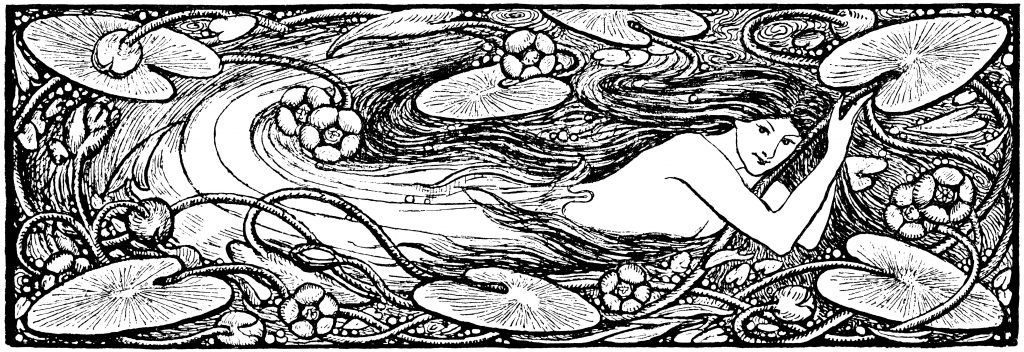
Now, giants are generally shy creatures and keep mostly to themselves, but all need company now and then, so having no other of their kind about these parts, Alphin and Alder were friends and knew each other’s place in things. But then one day, Alphin heard a voice coming from the spring that ran down the side of his hill, like no voice he’d ever heard before. He crept towards the heavenly sound and there he spied the Lady Rimmon, a water nymph, talking to the spring, with her long, raven hair swirling around that pretty face as if she were under the water, not above it and the silken shift she wore clinging to her form. You see, water nymphs usually stay in the lowlands, dancing through the rivers or floating in the lakes, but Rimmon was wilful and curious about where the water she tended and nurtured came from, so wandered into far reaches where other nymphs generally did not go. As she turned her face towards Alphin, she showed no fear of him, but smiled in innocent wonder and he was struck. From that day forward, wherever Rimmon roamed, he followed and they became the beloved ones, bonded and blissful.
Alder wondered what could have happened to Alphin, until one day he spied him with Rimmon and was bewitched by her beauty, just as Alphin had been. At first, Alphin welcomed him and all three wandered together, but soon enough the two giants were growling at each other over her favour, even though it was Alphin who Rimmon loved. If Alphin adorned her with a garland of daisies, well, Alder would find her a garland of cornflowers. If Alder plucked the sweetest fruit from the top of the pear tree, Alphin would search for the juiciest apples that this fair land could offer. And so it went, over and over and in no time at all, hearts swollen from blind passion and heads full of rushing blood set Alphin and Alder against each other and they strode forth to fight for the hand of Rimmon in the ancient way of giants.
The sky grew dark and thunder roared as they raced to the top of their hills, the very earth shaking as their feet pounded over the ground, sending the birds and animals to their hollows and nests while the villagers ran to their homes in fear. It was Alder who threw the first boulder way across the valley and on to Alphin’s Pike. It missed, landing but a few feet away from him, tearing into the sodden peat and covering Alphin with mud and stones. Now, Alphin’s rage became a torrent and his strength grew still more. He picked three boulders up, one by one and hurled them at Alder, each landing but inches away from his feet. As soil and dust began to cover the brooding sky, Alder, now not even remembering sense nor reason, found the greatest boulder that had ever lain upon his hill and threw it with all his might. It took Alphin down in one.
When Rimmon heard that Alphin was lost, she wailed and screamed through the valley so lamentably that the sound could be heard all the way to the sea. Her tears would not stop and filled the river until it became a flood that threatened to swallow the village. As the people made ready to flee from all they knew, Rimmon could bear no more. She climbed Alphin’s Hill, throwing herself from the jutting black rocks, diving like a swallow until she met her death and could once more be with her beloved. The people gathered her broken body up and laid her in the river so that in the way of her kind, she could be carried down to the eternal sea.
When the blood came down from Alder’s head, his sorrow could have filled the valley and all the other valleys in every corner of the world. Alder resolved to pay his penance and walked the land for age after age doing only good for no reward and in time his humility shrunk him down so that in the end he could not be seen as different to any man and in this way, he at last found peace.
Every year, come the anniversary of Rimmon’s death, a soft rain would fall on the hills and the rain was named The Tears of Rimmon. They were not tears of sorrow, but joy for eternal union and the people would take the water from the great stone bowls that we now sit by and drink it, for it was said to have the power of healing.
It dawned that Druce had stopped talking a while since. I’d been lost in a state I have no words for. I was changed in that moment, but I couldn’t tell you how.
“Where do you come from, Druce? Where does a name like Druce come from? I’ve never heard it round these parts.”
The corners of his mouth turned up and his eyes looked merry.
You’re a sharp lad, that’s half your trouble, that’s why you’re always making mischief, because all that thinking’s got nowhere to go. You need to get yourself some book learning. I’ll speak to yon Lord and see what he can do for you. He’ll not refuse me.”
“Yon Lord’s who keeps us poor.” I said, bowing my head a little for going against Druce, but he looked kindly and patted me on the back.
“Aye, that he does. But now, sithee, if you’ve a hankering for change, your people will need someone with book learning, will they not, to pass it on to them? Keep silent and do his bidding until you forge your armour, boy.”
Back down in the valley, I spotted Maisie Roode on her way to church with Seth close behind. She didn’t look nearly so pretty to me as she had the night before and for the first time I saw the way she looked at Seth and the way he looked at her. It cheered my heart and as it cheered, I saw Maisie’s sister, Martha and she saw me. The Lord sent me to the Minister in Lees, who was just and good and he learned me up well. Years hence, Seth, Maisie, Martha and me made a school out of Platt’s old barn and off to my first day of teaching, I felt cause to turn towards Alphin’s Pike and saw Druce striding up it. He turned and held his hand up for a moment. I knew he was off to wander and shamed though I am by it, my eyes filled with tears like a wain who’d lost his mam. I still think of him and all the things that might have happened if I had not heeded his story, but in those thoughts I call him by his real name; Alder. Alder – a giant amongst men.
Author’s note
The legend of Alphin and Alder goes back to a time before written history, indeed, it may go back thousands of years. There has been some speculation among historians that as Alphin is a Celtic word and Alder Germanic (Alphin’s Pike and Alderman’s Hill) the story may refer to a battle between Celtic and Germanic Tribes, although there is no certain evidence of this.
The name ‘Druce’ is Celtic for wise.